Thursday, December 6, 2012

Review #29: The Fartiste by Katherine Krull and Paul Brewer

Title:Krull, Katherine and Brewer, Paul. Fartiste. Simon and Schuster. 2008. 32 pages. Hardcover $16.99. ISBN 978-1-4169-2828-7
Genre: Non-fiction/Biography (CAN YOU BELIEVE IT!?)
Reading Level/Interest Level: 1.8/ K-3 per Titlewave. My recommendation : Grades 3-5
Similar Titles: Unknown


In the true story of French performer, Joseph Pujol , a young boy learns he has control enough over his intestinal muscles to move them on command, leading to countless performances of the “Fartiste” for family and friends. As he grows up, he marries and has 10 children. Money being tight as a baker, he begins to perform again, this time in the street. His dream is to one day perform in Paris, and perform he does.

Joseph is so successful, as a matter of fact, with his flatulent impressions, animal noises, music and sound effects that he not only performs to rave reviews at the Moulin Rouge, but in front of kings and diplomats, spending the rest of his life paling around with Toulouse-Lautrec, Pablo Picasso and other painters and play writers of note. Considered, ironically, a serious artist in the art of the fart, Pujol becomes a sensation, eventually moving his family to a private chalet and allowing scientists to study his dietary habits and muscle control when he ceased performing, after World War I.

While Titlewave recommends this title as an Easy Reader picture book, I can see why our local library has it listed under juvenile, or “tween” materials in their catalog. The first part of the book, the picture book part, is easy for younger children to read and has glorious, classic French inspired illustrations. However, given the content (it does actually take a certain level of maturity to read a book on an artist whose medium is flatulence), the advanced vocabulary and short biography at the back of the book, it is easy to see why it has been classified as a juvenile title.

I would recommend this book to younger, reluctant, tween readers (8-12 years old) who don’t want to give up the picture book but also want an introduction into the informative, but not so dull world of non-fiction. Besides, let’s face it, no matter how old we get, there is still something distinctly funny about fart jokes. This one, just happens to be true.

Wednesday, December 5, 2012

Review #28: The Last Unicorn by Peter S Beagle

Title: Beagle, Peter S. The Last Unicorn. Penguin Books. 1991.[1968] Tr. $13.65. 212 pages. ISBN 978-0-451-45052-4
Genre: Fiction/Fantasy
Reading Level/Interest Level: Listed as Young Adult – Recommend 6.3/ Grades 5-9
Awards: None
Similar Titles: The Golden Compass by Philip Pullman


After overhearing some unlucky hunters in her woods belligerently call out that she, as the forest’s protector, is the last of her kind, one lone unicorn sets out to discover the truth about the others like her. She learns that the other unicorns have been herded to the edge of the land by the dreaded and fearsome Red Bull. In her quest to discover where he has taken her sister unicorns, she is befriended by a bumbling and miserable magician, Schmendrick, who frees her from the clutches of an evil witch. It is Schmendrick, who, in an attempt to protect the unicorn from the Red Bull during an altercation that turns the unicorn into a human woman. While in human form, she begins to forget her true identity, her magic and her quest, instead experiencing love, and finally loss, which leads her to a new transformation and the discovery of the captivity of her sisters and while unwittingly helping a prophecy to fruition.

While filled with wonder and honor, I always found this novel to be sad and dark. The unicorn seems so lonely and suffers so much in her epic journey, becoming forever changed, yet never getting what she truly wants. So much so, that even if she returns to her home (and I’m not spoiling any endings here, so we’ll just leave it at that) she would no longer be the innocent, shining creature she once was, regardless if she returned victorious.

This book often appeals to young unicorn lovers out there, but let me warn that this novel should be read by the older set of those interested in the topic. In a developmental stage where emotions run high, it is important that the reader be able to process the grief, guilt, regret and sadness in the novel, and find the moral of the novel and a positive, even in a negative outcome, almost like The Neverending Story.  Without that greater understanding, younger readers might only see the darker side of the novel without being able to accurately render its meaning and content. I know I did.

Also a major motion picture:

Tuesday, December 4, 2012

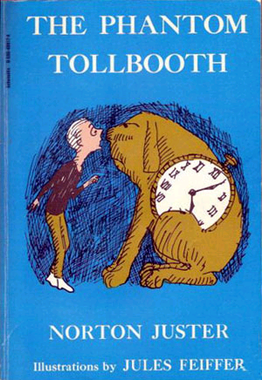
Review #27: The Phantom Tollbooth by Norton Juster

Title: Juster, Norton. The Phantom Tollbooth. Random House. 1961. Tr. $17.01. 255 pages. ISBN 978-0-394-81500-8
Genre: Fiction/Science Fiction/Adventure/Fantasy
Reading Level/Interest Level: 6.7/ Grades 5-8
Awards:
Series:
Similar Titles: Alice in Wonderland by Lewis Carroll, Yellow Submarine [Motion Picture] by The Beatles


Like most children his age nowadays, young Milo is bored. Constantly bored, constantly suffering, constantly disinterested with the world and watching the clock tick by slowly, until the day he receives a map and a magic tollbooth from a mysterious benefactor. The tollbooth transports him to “The Lands Beyond”, the land named Wisdom, where he must save Princess Rhyme and Princess Reason and restore the kingdom, saving it from discord and disharmony, phrases uttered often in the book, all over the controversial topic of which is better, letters or numbers. That is, of course, if he can escape dungeons, evil mathematicians, The Doldrums, The Mountains of Ignorance and the Senses Taker, with the help of a watch bellied dog and a downer of a companion, Humbug.

With turns of phrase, vocabulary words that will stretch the imagination, visual imagery that is literally comprised of the words on the page, and settings that seem to already exist in our minds, though we failed to name them, Juster’s Phantom Tollbooth is not only a fantastic adventure of a novel, but a book that shows a new inside joke every thirty seconds that children, and especially adults, that can appreciate the irony of names and places, like the “Senses Taker” and the infuriating “Spelling Bee”  will smirk and chuckle all the way through.

It is no small wonder that this book is often compared to Through the Looking Glass or Alice in Wonderland, as it has the same non-sensical, abstract, lunacy element that Carroll’s work does, with an intellectual element that, I think, surpasses even Carroll, who focused more on morals than smarts. It seems to me that Juster writes his novel from the perspective of a parent watching his own child struggle with the common “boredom” phase just as he did, and is giving him the tools to not only tell his own story out of nothing, but is teaching him how to look at his world in such a way, that it will always be interesting, even when there is nothing of interest to be had.

While I read this book at the age of 11 and understood it, I believe, due to the non-sequential delivery of events and the significant and advanced vocabulary, I would have enjoyed it much more at 13, even though we read it as a group. It is my recommendation that older tweens and advanced readers read this book as soon as they feel comfortable, and aren't afraid to carry a dictionary near them while reading.

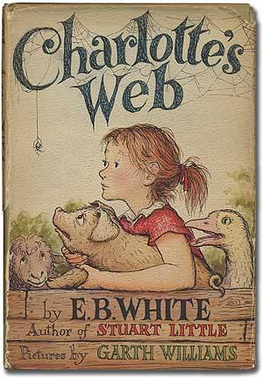
Review #26: Charlotte's Web by E.B. White

Title: White, E.B. Charlotte’s Web. Harper Collins. 1950. Tr.$18.89. 184 pages. ISBN 978-0-06-026386-7
Genre: Fiction
Reading Level/Interest Level: 4.4/ Grades 3-6

Awards: Newbery Honor 1953
Series: None

Similar Titles: James and the Giant Peach by Roald Dahl, Stuart Little by E.B. White


In a strange twist of fate, a young girl named Fern, saves a runt pig, whom she names Wilbur, from certain death. Raising him as a loving pet,  she soon learns that she must relocate Wilbur to her Uncle Zuckerman’s farm, where, despite Fern’s frequent visits, Wilbur finds himself in a daily battle to survive and keep himself from the chopping block and the Zuckerman’s Christmas dinner table.

With a whole host of talking barn animals, such as geese, horses, sheep and a surly rat named Templeton, Wilbur learns the hard facts of life and eventually befriends another outcast, a precocious spider named Charlotte, who is determined to save Wilbur’s life.  In an incredulous stroke of genius, Charlotte begins to spin short words and phrases into her web, to remind the Zuckerman’s, and the town, that this pig has value,  that he’s “terrific” and “humble”, and simply put,  “some pig,”  pig enough to go to the county fair.

This classic tale shows the unselfish, lifelong nature of true friendship and generous living as Wilbur shows his eternal gratitude for Charlotte long after she is gone, passing along her values and wisdom to the next generation and proving that once you have a friend, you are never alone.

There is a reason why E.B. White is considered one of the quintessential children’s writers of all time. His characters are realistic, yet fantastic, full and complex. Some are warm, some are hideous, all of them have faults but are redeemable. He never gives up on man (or animal) kind, showing them a crossroads and allowing the reader to sit in suspense to see if they will do the right thing, which in term makes them question their own motivesand behaviors.
 
Charlotte’s Web is an indelible part of every child’s life who reads it. A heartwarming tale such as this  should be savored and always, ALWAYS passed along. As a matter of fact, I passed on my older sister’s (and subsequently my) volume onto my daughter, who will learn to love Fern, Wilbur and Charlotte as much as I do.

Review #25: His Dark Materials by Philip Pullman

Title: Pullman, Philip. His Dark Materials (OMNIBUS). Knopf. 2007. Paperback $18.74. 933 pages. ISBN 978-0-375-84722-6
Genre: Fantasy/Fiction
Reading Level/Interest Level: 6.2/ Grades 5-8
Awards: Carnegie Medal (Northern Lights/Golden Compass)
Series: Northern Lights
  • The Golden Compass
  • The Subtle Knife
  • The Amber Spyglass
Similar Titles: The Lion, the Witch and the Wardrobe by C.S. Lewis, A Wrinkle in Time by Madeline L’Engle

This title is 3 books in one volume, The Golden Compass (originally printed as Northern Lights in the UK), The Subtle Knife and The Amber Spyglass. Printed shortly before the major motion picture, The Golden Compass, the book contains infinitely more content, more beauty, depth and suspense than the movie could ever hope to convey. While it is a “big read”, each book can be read separately, and would make excellent course material for group reading.

While there is Christian symbolism and sentiment involved, it is not so overwhelming as to interfere with the story telling of the parallel English world and the adventures of Lyra Belacqua ,with her quest to find the truth behind Dust, the Gobblers who kidnap local children, the church and her own heritage. In fact,  Pullman forces the reader to examine critically the nature and intentions of the ideology and behavior of the church in question, the Magesterium, who uses terror and fear to experiment and control the world to their own ends. We also see the evils of technology, the risk of losing one’s soul, of choosing right over wrong and of learning how to read and follow our own moral compass, or alethiometer, just as Lyra would.

With the aid of her daemon, or totem, and a  boy from an alternate universe,  young Lyra will not only travel between the worlds, but will discover the answers to the moral, theological, paranormal and scientific questions that people have been asking since the dawn of time. She will meet armored bears,  witches, evil officials, and long lost relatives, ride on fancy zeppelins, serve in great battles,  master astro-physics, visit great castles of ice, suffer great hardships, fight death, love, and suffering….she will live a thousand lifetimes in the span of three novels and will leave you breathless every step of the way.

Like the Lord of the Rings trilogy, it's a right of passage that every child read these books and find which way their compasses lead.

Review #24: The Lion the Witch and the Wardrobe by C.S. Lewis


Title: Lewis, C.S. The Lion, the Witch and the Wardrobe. Harper Collins. 1950. Tr. $15.34. 189 pages. ISBN 978-0-06-023481-2
Genre: Fantasy/Christian Literature
Reading Level/Interest Level: 5.5/ Grades 5-8
Awards: None
Series: Chronicles of Narnia


·         The Horse and His Boy
       ·         The Lion, the Witch, and the Wardrobe
       ·         The Magician's Nephew
       ·         The Silver Chair
       ·         The Voyage of the Dawn Treader

Similar Titles: Gulliver’s Travels by Jonathan Swift, Wrinkle in Time by Madeline L’Engle,  His Dark Materials by Phipl Pullman.

In war ravaged England, siblings Peter, Susan, Edmund and Lucy find themselves hidden away on a country estate off a reclusive gentleman, for safe keeping. During one of their long and dreary days, Lucy finds that the ornately carved wardrobe in the home not only stores old furs, but the doorway to a hidden world as well. Upon initially finding herself in a snowy glen, talking to a faun, otherwise known as the satyr, Mr. Tumnus, Lucy comes to know of the tyrannical and cruel ruler, The White Witch, whose castle holds great evil. She has cast a spell of eternal winter upon Narnia, the land she now finds herself in, and terrorizes the land and its creatures, all of whom talk and walk as humans do. One shining hope remains, as a revolution grows surrounding a prophecy of the return of the mighty lion ruler, Aslan, and the coming of the daughters of Eve and the sons of Adam.

Returning with her brothers and sister, Lucy attempts to acclimate them to the Narnian plight. Unfortunately, Edmund, disenchanted and bitter, forges a terrible alliance, which puts him and all of Narnia in danger. Can Lucy, Peter and Susan journey to the White Witch’s castle to save Edmund and return alive? Will they take up arms and defend Narnia, bringing peace back to the castle at Cair Paravel, and heralding the return of the mighty Aslan? Will they leave their own world, forever?

In a tale that is heavy with Christian sentiment, and characters based off of scripture (Jesus as the lion, the light of man), the eternal battle of good and evil is enough to carry even the greatest theologian nay-sayer to the next novel. With brilliantly written scenes, mythological creatures and deep characters that represent the struggles of every child in finding their own path, and their own sense of wrong and right, Lewis creates a rich tapestry of imagination, fantasy and hope for generations to come.  While this novel was the beginning point of the series when I read them as a child, the order has been shifted to begin with  A Horse and His Boy. However, readers will still be able to start with either novel and get the full experience as it was intended, as puzzle pieces to larger picture.

Also a major motion picture.

Monday, December 3, 2012

Tween as a Media Construct

(Delayed post...this what I get for not recognizing this was saved as a draft and not published! Sorry guys!)
Discussion: "There are some that say that tween is a media constuction. How does the media construct the "tween" and what are concerns with this?"

Some say that "tween" is a media construction and in some fashion they are correct. Obviously the age group, 8 or 9 to 12 or 13 has always existed, but it was publishing and media that began marketing to it, and thus justified its existence. (This is also the topic of my research paper).

John Newbery, the man for whom the literary award is named, was touted as the first person to actively market to children via literature, by placing ads in the back of his books, oddly enough, for pharmaceuticals. Whether it was the naivete of the children who read the novels or the legitimacy that the printed word seemed to provide, it was enormously effective. I can remember seeing ads in my comic books and choose-your-own adventure novels for items ranging from sea monkeys, to x-ray glasses, to magic tricks and other books, and I can assure you, they were equally effective. But, it was this successfully marketing strategy that really led to the development of tween literature.

Of course, some people will say that it developed because of the new studies that came out splitting developmental phases and progressions at different ages, showing that each stage had separate needs. This is, in part, true. However, I maintain that it is the purchasing power behind the "tween" age, that led to the legitimacy of the term and the increased focus on catering to their needs and wants.

In the 1930's, labor laws were passed that prohibitied "tween" aged children from working, though the term was not used at the time. At this point, these children ceased being breadwinners and instead became dedicated consumers, focused on leisure, school and homelife as it pertains to children. They spent their own money on books and associated merchandise and as time went on, a multi-tiered literacy model developed, including music, radio, books and movies, combined with product merchandising and placement, to further legitimacize the age as its own entity. Take for example the old serial radio (and eventually tv) shows of the 1930's, late 1940's, 50's, and 60's with branded merchandise in shop windows, and secret decoder wheels you could send away for with the sponsors' product box tops. Little Orphan Annie, the Lone Ranger and Howdy Doody are prime examples. The success of these programs in that middle childhood age range, between child and true teen, thus coined the 90's term "tween", laid the groundwork for Strawberry Shortcake, the Smurfs, Hannah Montana, New Kids on the Block....multi-million dollar properties that branched out into merchandise due to the ability of tween children to influence the spending habits of their children and to use their own pocket money on material goods.

The media, particularly where advertising is concerned, places these products, in everyone's faces so that they are impossible to miss. They get celebrities to endorse them, or indeed, create celebrities within the brand that promote just by being a part of it. Tweens have the need to emulate those that they see as being role models, whether good or bad and that directly influences their purchasing power. In part, advertising in the media is what has led to the monster commercialism that children in this category have fallen prey to, necessitating discussions on consumerism much earlier than in previous generations.

Just think about it. Watch outside a movie theater for 20 minutes and see how many children, particularly girls, who are, for some reason, encouraged, or perhaps marketed to more frequently (perhaps the marketers are targeting them young to influence their shopping habits as adults with their own tweens and children?), and see just how many are wearing a t-shirt or accessory of a "tween" band, artist, book, movie or phenomenon. See how many are willing to go "unbranded" and how many cling to their brands like a life-raft of popularity. For an impressionable age group that wants desperately to fit in while feeling more grown up, it should seem almost manipulative to market directly to them, and in some cases it can be. However, adolescence is one of the most difficult experiences, a rite of passage, that a child can go through. It is the transition between childhood and semi-adulthood and the developmental needs are significantly different than those younger or older than them. They are in great need of materials that help them develop positive identities, ties with their communities, self-esteem and other developmental assets, more so know that ever previously recognized, in no small part to the availability of materials much more adult in scope that are available to them, as well as the unique experiences of an adolescent growing up in an increasingly confusing and difficult global community where one has to fight to realize that their differences are acceptable, and more importantly, vital.

Pages

Search

Copyright Text