Wednesday, May 7, 2014

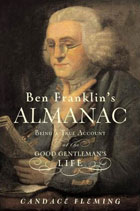
Review: Ben Franklin's Alamanc: Being a True Account of the Good Gentleman's Life by Candace Fleming

Fleming, Candace. (2003).Ben Franklin's Alamanc: Being a True Account of the Good Gentleman's Life. New York: Atheneum Books for Young Readers. 119 pages. ISBN 0689835493

Awards/Selection Lists:
- Richie's Picks
- ALA Children's Notable Book
- ALA Best Book for Young Adults
- Association of Booksellers for Children Fall Favorite 2003
- Book Links Best Book 2003
- Booklist Top ten Biography for Youth, 2003
- CCBC Choices 2004
- Children's Literature Choice 2004
- Great Lakes' Great Books Nominee 2005
- James Madison Award Honor Book
- Jefferson Cup Honor Book (Virginia Library Association) 2004
- Junior Library Guild Selection
- Maine Student Book Award Nominee 2004-2005
- NCSS-CBC Notable Social StudiesTrade Book 2004
- New York Public Library Best Book for Reading and Sharing, 2003
- New York Public Library Best Book for the Teen Age, 2004
- Parents Choice Gold Award Winner
- Publishers Weekly Best Book of 2003
- Riverbank Review Children's Book of Distinction 2004
- School Library Journal Best Book of 2003
- Washington D.C. Capitol Choices Book 2003


Author's Website: http://www.candacefleming.com/

Brief Summary:One of the founding fathers of the nation, Benjamin Franklin is well known, and his accomplishments well documented. Laid out in chronological order, Fleming leaves no stone unturned to reveal Franklin's tenacity, ingenuity, curiosity and his utmost desire to do right by his country, his children, and those he served, by improving, doing, pushing the envelope and not being afraid to offend those in power by being honest, just and proud.

Along with his innovations in his electrical experiments, instituting state schools, libraries, fire brigades, becoming first Postmaster General, being a member of the Continental Congress, helping write the Declaration of Independence, he was a skilled diplomat, a lover, a writer, a man who believed less in organized religion and more in the spirituality of doing the right thing and being chased by the consequences throughout subsequent life-times. He was a complex and interesting character whose humanitarian efforts are often outweighed by the extravagances of his later diplomatic years in France, in part due to the outrage of John Adams wife. Nevertheless, he remains, one of America's most spectacular historical figures, with much more to tell.
 
Personal Reaction: I won't lie, I had a hard time getting through this book. I am very interested in the content, and there is SO much information that I had not previously read on Franklin. You really get a sense of his desire to help his fellow man, of his humility, and his curiosity through Fleming, but it is a bit overwhelming being crammed in small print into 119 pages. Also, while there are many illustrations, everything is in black and white and made to look like an old fashioned newspaper page, which I understand the desire for. However, it makes it difficult to stay focused on the content as there is no color to relieve the eye and offer excitement and a way to really connect with Ben's character.
Front/Back Matter:Title page, copyright page, table of contents, foreword, chronology, content, bibliography, picture sources, additional resources (one page for books, another for websites), index.

Content Evaluation: Very well informed and well documented, the content is extremely fact heavy. I would have liked to have seen a more personal narration, some way to connect and empathize with Ben, rather than just being told about his life. The use of color and a different format might lead to a better review of this book. I think I will attempt to re-read it for leisure, to re-assess if my perceived time constraint caused me to be less entertained by this book. However, its relative dryness is one of the things I dread most. Hundreds of tiny stories inserted into different frames on the page also make it difficult to keep the chronology straight. Still, as I said, I'm willing to give it a second chance.

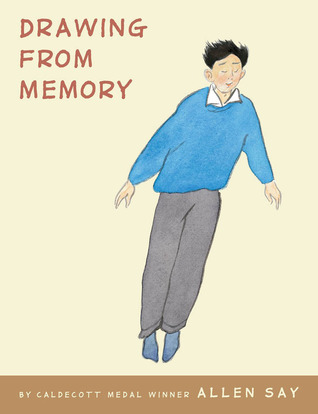
 

Review: Drawing From Memory by Allen Say

Say, Allen. (2011). Drawing From Memory. New York: Scholastic Press. 72 pages. ISBN 9780545176866

Awards/Selection Lists:
- Nonfiction titles from ALSC Notable Books lists 2002-2013
- Richie's Picks
- Siebert Honor


Author's Website:http://www.houghtonmifflinbooks.com/authors/allensay/

Brief Summary: Allen Say is an award winning, Japanese born illustrator and writer who led a very interesting and independent life, determined to become a cartoonist, seeking out his mentor, his sensei, on his own at the tender age of 13, while living on his own and attending school. Later, he moves to America with his estranged father, to live his dream, but the relationship with his sensei, and what he has learned about drawing as seeing and painting as writing, stays with him forever, as this memoir to his great teacher proves.

Personal Reaction: I adored this book. I love Japanese culture and this book reads an awful lot like a lot of the literature I have read from that area. It may seem a little choppy, and some of the content is told with pictures instead of language, which could be why this is listed in our OPAC as a graphic novel, regardless of the fact that it is covered in photos and cartoons, but I think that it fits very well with the storyline and the geography. Say led a very interesting life, and it is amazing to see the amount of independence post war Japan allowed him, and never thought twice about. Even with his father, his grandmother, and some teachers telling him he would never amount to anything as an artist, he pursued his passion, encouraged by his sensei, 2 teachers and a few friends to become one of the most celebrated talents.

Personally, I think what I love most about this book is that I always wanted to be an artist, but was always told that it wasn't lucrative enough to be an occupation, and then the time I could have used to train and perfect a craft was wasted, as it became a sometime hobby, and one that I often hid from others. I really take Say's story to heart because he pursued his passion to the very end and lived his dream. Like those people he saw in Tokyo that lived and died in offices, I lived that way, and I would prefer to live like Say, following his example. It makes you wonder, is it ever really too late?
Front/Back Matter: Title Page, main page, copyright page, dedication, content, author's note.

Content Evaluation: As stated above, the tone is a little choppy, but very appropriate for a Japanese styled book and I think it carries the story, very well. The photos and illustrations are plentiful, the language easy to absorb and the author's note helps tie it all together, really identifying the purpose of this book, to honor his sensei.


Review: Raggin' Jazzin' Rockin': A History of American Musical Instrument Makers by Susan VanHecke

VanHecke, Susan. (2011). Raggin' Jazzin' Rockin' : A History of American Musical Instrument Makers. Honesdale, Pennsylvania: Boyds Mills Press, Inc. 136 pages. ISBN9781590785744

Awards/Selection Lists:
- Nonfiction titles from ALSC Notable Books lists 2002-2013


Author's Website: http://www.susanvanhecke.com/

Brief Summary: Did you know that Avedis Zildjian was originally a candymaker, his namesake the original maker of the cymbal 300 years previous, in Turkey? Leo Fender was a radio repairman,  and Laurens Hammond, whose name is found on grandma's classic organ in the living room, invented 3-D glasses! Men like this weren't necessarily music makers themselves, but they forever changed the face of American music by their innovation and imagination just as much, and in some cases more, as the musicians chronicled in this book, who took a chance and improved the profession that they loved, while starting businesses that would become household names.

Personal Reaction: I love to heard the history behind instrument makers, and the effects that they had on music of the day. There is a lot of music history in this book, packed between the stories of instrument makers, that makes this book dual purpose. The tone is charming and personable, with a lot of excellent pictures and illustrations. I particularly like the story of Heinrich Steinway (formerly Steinwegs) making pianos in his kitchen, and how he literally changed the shape of the piano, as we know it today, his family even building their own concert hall so that musicians could exhibit their talent, and the instrument simultaneously.

Did you know that during World War II they actually stopped making pianos and started making airplanes, and even the great brass horn maker Conn was making military navigation instruments?! Martin, Fender, Ludwig, Moog...these men are legends in the industry, developing innovations, techniques and instruments of distinction for decades and even centuries, and all are covered in this book as well. No matter where you look, these folks survived tragedy, death and the odds to bring music and their dreams to the American people, and people across the world really. It's also interesting to note that MANY of these incredible artists, had families that immigrated from Germany.

The book is also made all the better because each purchase goes toward continuing music education in schools.

Front/Back Matter:Title Page, copyright page, table of contents, introduction, content, "A Closing Note", Notes (including sources), index.

Content Evaluation: The content in this book is amazing. Stashed in the margins and between photos and histories of these famous instrument makers are the types of music and big names in the industry who influenced, or were influenced, by the instruments and makers themselves, showing how the world and industry changed over time, and how one development influenced the other in a symbiotic relationship.

There are a phenomenal amount of resources included, in additional to the basic bibliography, and quote sources are listed by chapter, so it is easier to believe in the authenticity and accuracy of the information presented. The historic photographs and illustrations really carry along the story and make it more exciting that the title could possible suggest. It can get a little long for those not terribly interested in the subject, and even I had a hard time staying interested by the time I reached my favorites (Martin and Fender), but I highly encourage the reader to wade through each chapter. You'll find some amazing stories of perseverance, tradition and innovation.

Tuesday, May 6, 2014

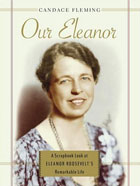
Review: Our Eleanor: A Scrapbook Look at Eleanor Roosevelt's Remarkable Life by Candace Fleming

Fleming, Candace. (2005). Our Eleanor:A Scrapbook Look at Eleanor Roosevelt's Remarkable Life. New York:Atheneum Books. 192 pages. ISBN 9780689865442

Awards/Selection Lists: 
- Nonfiction titles from ALSC Notable Books lists 2002-2013
- Richie's Picks 
- ALA Notable Book
- Best Book for Young Adults
- Jefferson Cup winner,Virginia Library Association
- Junior Library Guild Selection
- New York Public Library 100 Titles for Reading and Sharing 2005
- Oppenheim Toy Portfolio Gold Medal Winner
- Parent's Choice Gold Medal
- Publishers Weekly Best Book 2005
- School Library Journal Best Book 2005


Author's Website: http://www.candacefleming.com

Brief Summary:  Most people know of Eleanor Roosevelt's generous and charitable acts, her contributions toward making the United States a better place during her husband, Franklin D. Roosevelt's presidency. What they may not know is that she came from an unhappy childhood, where the seeds of insecurity were planted that would haunt her the rest of her life. From a cruel mother to a drunken father, a harsh grandmother, wild and crazy aunts and uncles, Eleanor would eventually find her place in the world, and find where her true power and happiness came from, making other people's worlds better; making a difference in the lives of those who truly needed it, and it was her inspiration and intelligence that led to many of the reformations that swept the country during FDR's presidency, though after his death, she felt she could finally be her true self, and as she said "The story is over." But was it?

Personal Reaction: I've always thought of Eleanor Roosevelt as a great lady. I had heard rumor of FDR having an affair, but Eleanor's relationship with FDR always seemed so strong in everything I had read, and I do believe that he would not have been as successful a president if she had not had the strength to stay with him, though the love and trust had gone from their marriage. They truly became partners and that is a fortitude I am not sure I could have mustered. She was a lonely child and crazed attention, and I feel I can relate to her in so many ways. She wanted to be loved, she wanted to be liked, and part of that lead her to that feeling of fulfillment she finally found in helping the less fortunate who simply wanted a better life for their children. I think, in a way, Mrs. Roosevelt was working toward making sure that every child she touched had a better, more secure life, even if it was simply emotionally, than she had. We all want to provide a better world for our children, and it seems as if Mrs. Roosevelt was finally coming out of her shell and playing mother to the world. She is one of those characters from history that I wish I could have befriended. I think we would have had a lot in common.
 
Front/Back Matter: Title page, copyright page, acknowledgments, table of contents, foreword (a personal note), chronology, family tree, resources (More about Eleanor), picture credits, source notes.

Content Evaluation: The layout is very logical and the tone intriguing. There is a lot of information to sort through, but I found the information interesting, particularly the passages on her later life, where I saw the issues from her past being resolved in the present, through others. The sources and resources are plentiful for further exploration, and the chronology and family tree make it easy to keep things in order, and the relationship between Teddy Roosevelt, Eleanor Roosevelt and Franklin Roosevelt apparent. Overall, a great history of an amazing lady.

Review: Genius: A Photobiography of Albert Einstein by Marfe Ferguson Deland

Delano, Marfe Ferguson. (2005). Genius: A Photobiography of Albert Einstein. Washington D.C.: National Geographic Society. 64 pages. ISBN 0792295455

Awards/Selection Lists:  
- ALA/Book Links Best New Books for Classroom
- Outstanding Science Trade Book for Young People
- Notable Children’s Book of Jewish Content-Association Of Jewish Librarie
- Orbis Pictus Honor Book
- New York Public Library Books for the Teen Age
- Nonfiction titles from ALSC Notable Books lists 2002-2013

Author's Website: http://marfebooks.com/

Brief Summary: As one of histories most recognizable figures, Marfe Ferguson Delano profiles the life of scientist and humanitarian, Albert Einstein, from his beginnings in German, Italy and Switzerland, to America, his 2 marriages, 2 sons, and 2 step-daughters and puts to rest the unfounded rumors that Einstein took bad marks in school due to lack of proficiency, his involvement in the Manhattan Project and that his life as a patent clerk was all drudgery. As one of the world's most brilliant thinkers, and the father of quantum physics, Einstein maintained his childish enthusiasm, his curiosity about the world and his desire to make it a better place, inspiring generations to come, even landing on the cover of a very famous magazine at the turn of the 21st century.

Personal Reaction: Albert Einstein is one of my favorite characters from history, notably because he was what people considered to be relatively eccentric. He was brilliant, tempestuous and precocious as a child, but loving, with parents who encouraged his independence and imagination. As an adult he was a pacifist, a thinker, full of imagination and curiosity, following love and wanting to make the world a gentler place. As he grew older his appearance became more disheveled,  he never wore socks, and he was never more loved or respected as a hero, even by people who had no idea what his theories and articles meant. Above all, I think I respect not only his intelligence but his gentle nature, a lover not a fighter. You don't hear of many people who made an indelible mark on the world who follow that philosophy.

While the book was brief, it gave a good overview of his life, from birth to death, though the chapter on his death seemed the most brief. It is interesting to me to note that the condition he died from, an abdominal, aortic aneurism is the same genetic condition that my uncle died from less than a year ago. I think he would have been pleased to know that he had something in common with such a similarly eccentric spirit. While I would liked to have seen more in-depth information, I think this is a great start for those still testing the world of non-fiction and biographies, where excessive length can cause disinterest. I never lost interest, and it left me wanting more, which is often the hallmark of a great writer.

Front/Back Matter: Brief title page, full title page, copyright page with dedication, quote, foreword, content, afterword, chronology, resources, credits, index.

Content Evaluation: The credits are listed chronologically but in an odd configuration that can make it difficult to determine what goes where. However, when quotes are used in the text, it is often followed by a footnote or reference to the original source as well, which helps. The additional resource page is helpful, as is the information on the Albert Einstein Archives. I would have liked to have seen more content, as mentioned above, but the overview of Einstein's life is more appropriate for Young Adults still venturing into the genre to test the waters. It's not too overwhelming and of good overall length, so that I would not hesitate to recommend this for older tweens as well.

Review: Claudette Colvin: Twice Toward Justice by Phillip Hoose

Hoose, Phillip. (2010). Claudette Colvin: Twice Toward Justice. New York: Square Fish Publishing. 160 pages. ISBN 0312661053

Awards/Selection Lists:
- Newbery Honor Book
- Robert F. Sibert Award Honor
- YALSA Award for Excellence in Nonfiction Finalist
- Jane Addams Children’s Book Award, Honor
- ALA Best Book for Young Adults


Author's Website: http://philliphoose.com/

Brief Summary:  Nine months before Rosa Parks made her immortalized stand against segregation on a Montgomery, Alabama bus, a teenage girl in the same city was arrested and jailed for refusing to give up her seat to a white person on a bus. Almost lost to history because she was not considered an appropriate role model for a civil rights movement, it was the court case that she helped bring to the courts of Alabama that ended segregation, though she would tell you, the fight's not over yet.

Personal Reaction: This account of Claudette Colvin's story, in her own words and Phillip Hoose's is fantastic. I could not believe that a story like this had not been presented in school as part of our study of the civil rights movement. This girl had guts, even as a teenager, and dared to take a stand to say "This is not right." Hoose found her story when he was writing "We Were There, Too." and I am so glad he did. We get to hear from Claudette herself the ups and downs, the emotions and thoughts running through her head from the start through the end, why she believes Rosa Parks was a better role model, but also where injustice reined, even in the civil rights movement she helped found with her own sacrifice. It is personal, emotional, brave, outstanding and you can really tell how passionate Hoose was when telling her story. Imagine if we had lost her story  forever. Now her story can help children of all ages learn to stand up for what's right, to be brave, and above all, to make your voice heard.
Front/Back Matter: Title page, copyright page, table of contents, content, author's note, bibliography, notes, acknowledgments, picture credits, index

Content Evaluation: Hoose's tone was enthusiastic, though the format was sometimes a little choppy. His notes, bibliography and picture credits were extensive, though he notes that some citations may be missing. As with most of his books, his resources are excellent, thorough and plentiful, allowing for substantial further research, and offering legitimacy to any information presented as facts.

Review: Children of the Great Depression by Russell Freedman


Freedman, Russell. (2005). Children of the Great Depression . New York: Clarion Books. 118 pages. ISBN  0618446303

Awards/Selection Lists:
- Nonfiction titles from ALSC Notable Books lists 2002-2013
- Golden Kite Award


Author's Website: (Publisher entry. No official site found) http://www.hmhco.com/bookstore/
authors/Russell-Freedman/2231331

Brief Summary:  The Great Depression threaten to permanently cripple the United States during the 1930's. After the stock market crashed in 1929, people began to lose everything. Where once there had been frugality and thrift, there was now desperation. Where there was once segregation and prejudice against people of color, there was downright hatred and abuse, as people were literally fighting for scraps in the street to feed their families. Four million people, including children, migrated across the country looking for agricultural work. Four million people experienced the terrible droughts that left the destitute, desperate and in peril. Shanty towns were built as people were kicked out of their homes. Malnutrition became common. Schools closed, jobs were scarce and a living wage, even more so. While Franklin Roosevelt's New Deal helped bring the country out of the Great Depression, attempting to provide work, pride, and the ability to support one's self and family, the effect on America's children did not go unnoticed. Freedman uses the many photographs taken by government hired documentarians to reach readers, and show them just how bad things really were, how this was not a dream, but a very real, very dangerous period of out country's history through the words of its youngest victims.

Personal Reaction: This is a fantastic book. It's written well, but the content, with all of the poignant photographs makes it much more gritty and real, and quite frankly, heartwrenching. It was a desperate time and I can remember asking my Grandmother about it, and realizing that because of the Great Depression, she had developed habits that never went away, and in fact came in handy during World War II, like storing rubber bands and aluminum foil, and contributing to pack rat syndrome. That whole generation helped teach me how to make it through tough times, how to stretch my pennies and make a meal out of practically nothing. I have an immense about of respect and empathy for those who had to go through this terrible time, and especially for those, like my grandparents, who were so young and seemingly helpless at the time, but still, to this day, do not complain about it. They simply take pride in their accomplishments.
 
Front/Back Matter: Photo, title page, copyright page, dedication page, table of contents, introduction (picturing the Great Depression), content, chapter notes, selected bibliography, picture sources, index.
 
Content Evaluation: This book is beautifully written, with so many exceptionally well cited resources and notes. The photographs are amazing, and even though everything is in black and white, it carries a heart with it, the feeling of depression and desperation, of dryness and struggle, that accompanied the Great Depression, and it works to convey the message of the story, while highlighting the magnificence of the perseverance of those who fought against the terrible times.

Pages

Search

Copyright Text